
Architects of the West Kingdom – Worker Placement with a Devious Twist
Build a cathedral, hire apprentices, and arrest your rivals' workers — the accessible, interactive gateway into Garphill Games' acclaimed West Kingdom trilogy.
📋 Game Details
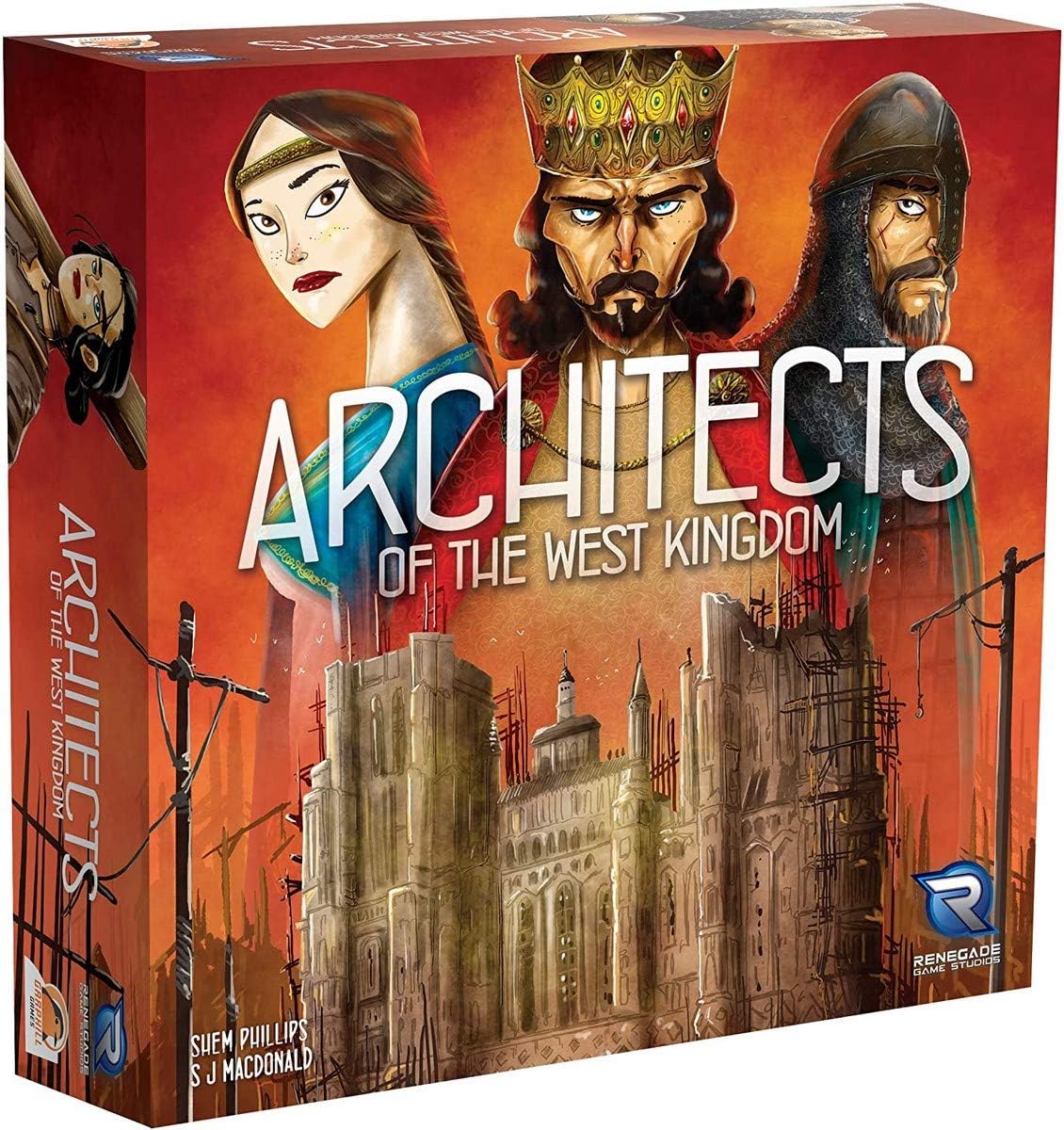
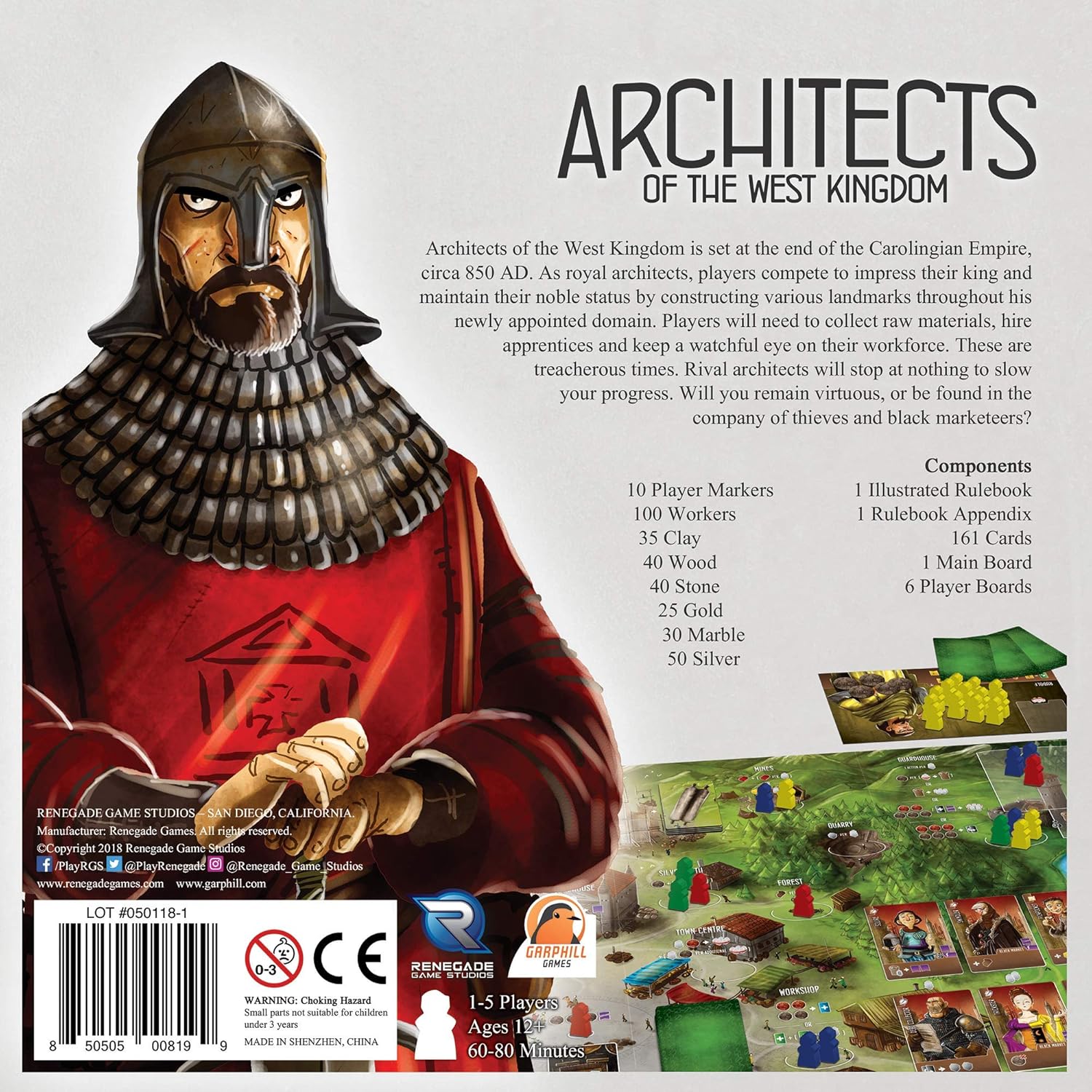
Architects of the West Kingdom is the first entry in Garphill Games' acclaimed West Kingdom trilogy, designed by Shem Phillips and S J MacDonald. Set in 850 AD during the Carolingian Empire, players take on the role of architects competing to build the kingdom's greatest cathedral, hiring apprentices, gathering resources, and constructing landmarks — all while managing a delicate balance between virtue and the seedy temptations of the black market.
What separates Architects from typical worker placement games is its signature "arrest" mechanic. Players can capture rival workers directly off the board and hold them captive, demanding payment for their release or marching them to the Garrison for a bounty. It's a genuinely aggressive twist that Sprites and Dice called "nearly unheard of in worker placement games," blending the calculated planning of a classic Eurogame with the confrontational energy more typical of American-style design.
Meeple Mountain summarized the experience perfectly: "Accessible but with subtle complexities that will reward more experienced players, interactive without ever being punishing or overly confrontational, and richly evocative of a world through both its art and its mechanisms, Architects of the West Kingdom is a terrific game."
How to Play — Watch First
What Is Architects of the West Kingdom?
Architects of the West Kingdom is a worker placement and resource management game for 1 to 5 players. Each player begins with all 20 of their workers, placing them one at a time onto shared board locations to gather resources, recruit apprentice cards, work on the cathedral, or browse the black market for rare materials. Unlike many worker placement games that limit each space to a single worker, most locations in Architects reward stacking multiple workers — each additional worker at a location makes that action progressively more valuable.
The game's centerpiece is the Virtue track, which tracks each player's reputation. Building on the cathedral raises virtue, while shopping at the black market for cheap, plentiful resources lowers it — climb too high, and the black market becomes off-limits; drop too low, and you're barred from the cathedral entirely. Layered on top is the arrest mechanic: players can seize rival workers directly from the board, holding them hostage for a ransom or marching them to the Garrison for a coin bounty.
What Makes It Stand Out
The Virtue Track
A constant balancing act between black market efficiency and cathedral-building piety drives every strategic decision.
Worker Arrests
Capturing rival workers off the board adds a genuinely aggressive, "Take That" layer rare in worker placement games.
Stacking Action Spaces
Most locations reward multiple workers, creating constant tension over when to commit versus when to pull back.
Asymmetric Characters
Each player starts as a different character with unique starting conditions, adding variety across plays.
How Does It Play?
Turns are refreshingly simple — place one worker, resolve the location's action, repeat until all 20 workers have been placed and the round ends. Dice Monkey praised this pacing directly, noting that "each turn is VERY fast," since the only decision each turn is where to commit your next worker. The strategic depth instead emerges from sequencing: deciding when to gather resources, when to brave the black market despite the virtue cost, and when to strike at an opponent's workers before they can consolidate a powerful position.
Meeple Like Us's review highlighted a fascinating psychological dimension of the resource system — accumulating large stockpiles of materials "decouples your instincts from your best interests," since players rarely know exactly how much they'll need until the endgame, encouraging a kind of productive hoarding anxiety that adds tension without feeling punishing. Board 'N' Bones similarly praised the arrest mechanic as "by far the best part of the game," noting it flows smoothly at the table despite sounding complex when explained.
One consistent critique across reviews, including Substack's detailed breakdown: the base game can suffer from a runaway leader problem on the cathedral track, where whoever reaches the top first often pulls dramatically ahead, since other buildings are comparatively harder to construct in quantity. Two expansions — Age of Artisans and Works of Wonder — are widely credited with resolving this imbalance and are considered close to essential by veteran fans.
Rating Breakdown
Pros & Cons
✅ What We Love
- The arrest mechanic adds genuine, refreshing interaction rare in worker placement
- Virtue track creates a constant, engaging risk-reward balancing act
- Fast, simple turns despite real underlying strategic depth
- Outstanding component quality and evocative medieval artwork
- Excellent solo mode and strong 2-player bot support
- Approachable entry point into the heavier West Kingdom series
- Asymmetric starting characters add welcome variety
❌ What Could Be Better
- Base game can suffer from a runaway leader problem on the cathedral track
- Iconography-heavy board takes a session or two to fully internalize
- Considered the lightest and least replayable of the three West Kingdom games
- Expansions feel close to essential to fully balance the experience
Who Is This Game For?
🎯 Perfect For:
- Groups who want worker placement with genuine player interaction
- Players transitioning from lighter games into heavier Euro strategy
- Fans of medieval themes and evocative historical artwork
- Solo players — the AI bot mode is excellent and well-regarded
- Anyone looking for an entry point into the wider West Kingdom series
❌ Not Ideal For:
- Groups who dislike any direct player conflict
- Players seeking the heaviest, most complex West Kingdom entry — try Paladins instead
- Anyone unwilling to consider expansions for full balance
🏗️ Final Verdict
Architects of the West Kingdom remains one of the most approachable, genuinely interactive worker placement games available — its arrest mechanic injects a satisfying jolt of confrontation into a genre often criticized for feeling solitary, while the Virtue track gives every decision real thematic and strategic weight. A runaway cathedral strategy can occasionally unbalance the base game, and the two expansions are nearly essential for the fullest experience, but as both a standalone game and a gateway into Garphill Games' acclaimed West Kingdom trilogy, Architects is an easy and confident recommendation.
This helps us keep Blue Dragon Board Games running and ad-free. Thank you for your support!
Leave a Comment on this article:
No comments yet — be the first to share your thoughts!
Leave a Reply