
Descent: Legends of the Dark – The Most Immersive App-Driven Dungeon Crawler Ever Made
Heroes rise in Terrinoth as an app narrates your story, controls every monster, and turns a board game into something closer to a digital RPG with cardboard and miniatures.
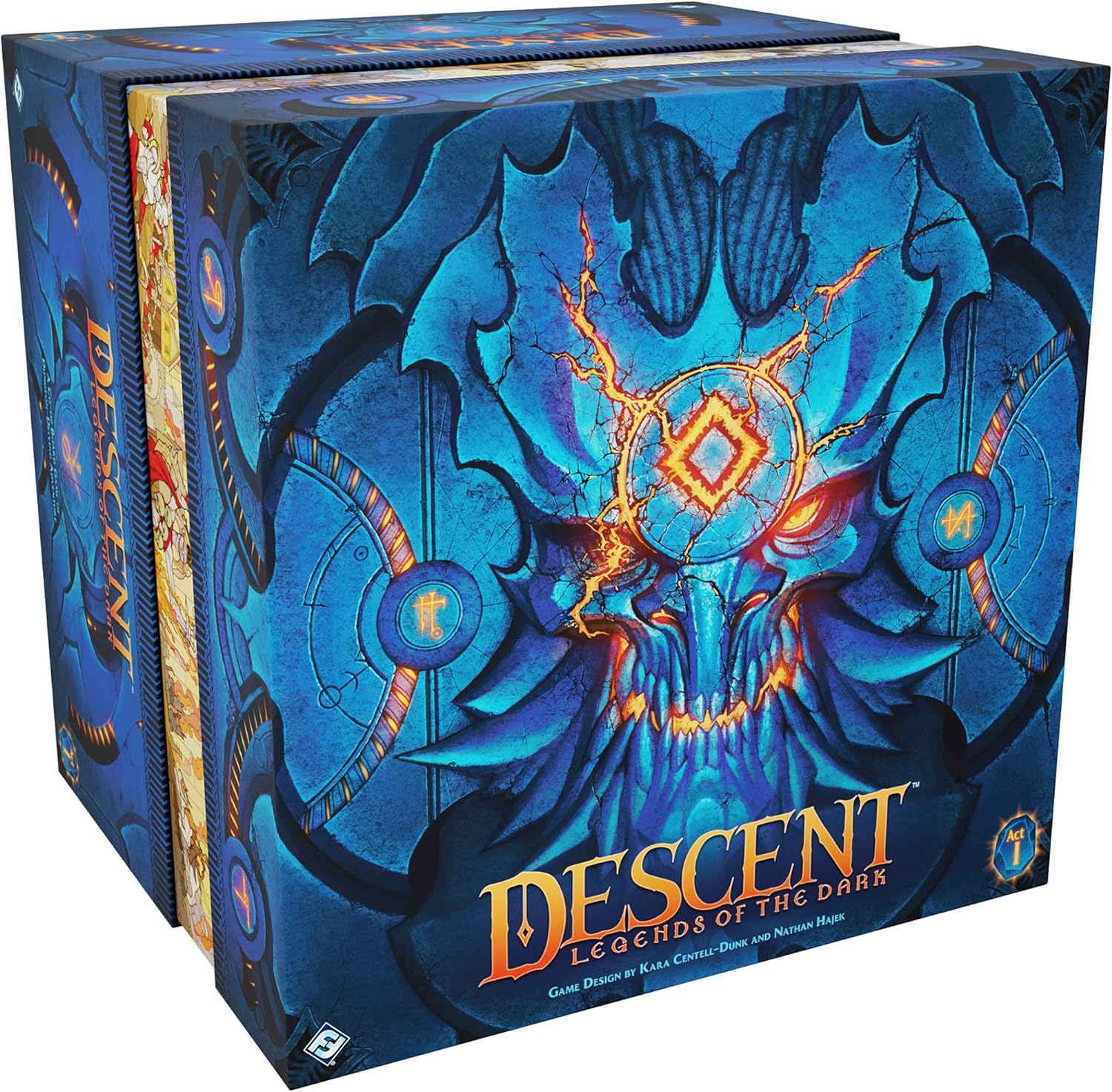

📋 Game Details
Descent: Legends of the Dark represents Fantasy Flight Games' most ambitious experiment with app-driven board gaming. Designed by Kara Centell-Dunk and Nathan Hajek, it completely reimagines the long-running Descent franchise — abandoning the original's 1-vs-many "Overlord" format entirely in favor of a fully cooperative experience where the app itself plays the role of game master.
Polygon described it as feeling "like a board game, but plays like an RPG" — and that's precisely the experience Descent delivers. The app handles monster AI, narrates an genuinely well-written story across 14 quests, presents dialogue choices that shape your characters, and even plays voiced cutscenes when cast to a TV. Meanwhile, the physical components — modular 3D terrain, detailed miniatures, weapon cards with flip-able alternate effects — handle the tactile combat and exploration.
Players who complete a full Descent: Legends of the Dark campaign consistently describe a genuine narrative arc — characters develop distinct personalities through dialogue choices, side quests deepen the world, and the app's "rolling fog of war" makes exploration feel like discovering a real dungeon rather than flipping pre-placed tiles. It's the closest a board game has come to feeling like a tabletop RPG without a human game master.
How to Play — Watch First
What Is Descent: Legends of the Dark?
Descent: Legends of the Dark is a fully cooperative app-driven dungeon crawler for 1 to 4 players. Players select heroes from Terrinoth and progress through a 14-quest campaign spanning 50 to 65 hours of total playtime. Unlike the original Descent series, there is no Overlord player — every monster, trap, and story beat is controlled by the free companion app.
The app builds the dungeon as you explore it — revealing new map sections, telling you exactly where to place terrain pieces, portcullises, and doors as your party moves forward. This "rolling fog of war" approach means the physical board is constructed progressively rather than fully set up at the start, creating genuine surprise and discovery during exploration.
What Makes It Stand Out
AI-Driven Monsters
The app controls every enemy with genuine tactical AI — no player needs to learn or manage monster behavior rules.
Visual Novel Storytelling
Branching dialogue, character-shaping choices, and voiced cutscenes when cast to a TV — narrative depth rare in board gaming.
Progressive Map Building
The app guides you to build the dungeon as you explore — adding levels, stairs, doors — creating real exploration tension.
3D Terrain & Minis
Genuinely impressive cardboard 3D terrain pieces and detailed hero miniatures create real table presence.
How Does It Compare to Other App-Driven Games?
Players familiar with Mansions of Madness will recognize the app-driven format, but Descent takes the concept significantly further. Mansions of Madness's app manages a single scenario; Descent's app manages an entire 14-quest narrative campaign with persistent character development, equipment crafting, skill trees, and choices that meaningfully affect later quests. The story is genuinely well-written — closer to a D&D campaign in tone than a typical dungeon-crawl narrative.
The trade-off is total app dependency. Mansions of Madness has an offline classic mode as a fallback. Descent has none — if the app is ever discontinued, the physical game becomes unplayable. This is the single biggest risk factor for the long-term value of the purchase, and it's worth weighing seriously given the premium price point.
Rating Breakdown
Pros & Cons
✅ What We Love
- Genuinely RPG-quality narrative with branching choices
- App-driven AI eliminates the need for an Overlord player
- Progressive map building creates real exploration tension
- Stunning 3D terrain and detailed miniatures
- 14 quests spanning 50–65 hours of campaign content
- Voiced cutscenes when cast to a TV add cinematic flair
- Works excellently solo or with up to 4 players
❌ What Could Be Better
- Total app dependency — unplayable if the app is discontinued
- Premium price point, even at typical discount levels
- 3–4 hour sessions per quest require significant time commitment
- Some reviewers found certain mechanics shoehorned compared to refined alternatives
Who Is This Game For?
🎯 Perfect For:
- Dungeon crawler fans who want genuine RPG-quality narrative
- Groups who want a long, evolving cooperative campaign
- Solo players — the game shines as a single-player narrative experience
- Fans of Mansions of Madness wanting an even deeper app-driven experience
- Players who appreciate stunning component quality and table presence
❌ Not Ideal For:
- Players who refuse to rely on an app for gameplay
- Groups wanting short, casual game night sessions
- Budget-conscious buyers — this is a premium investment
- Anyone concerned about long-term app support and discon
Leave a Comment on this article:
No comments yet — be the first to share your thoughts!
Leave a Reply