
Catan – The Board Game That Started It All
The game that brought millions of people to the table — trading, building, and negotiating on the island of Catan since 1995.
How to Play — Watch First
📋 Game Details
Catan is the most important board game of the last 30 years. That's not an exaggeration — when Klaus Teuber released it in 1995, it almost single-handedly created the modern board game industry as we know it. Before Catan, board games meant Monopoly and Risk. After Catan, a generation of designers started making something entirely different.
Over 45 million copies have been sold worldwide. It has been translated into more than 40 languages. And despite everything that's come since, it still delivers one of the best game nights you can have — tense, social, unpredictable, and endlessly replayable.
Players who discover Catan consistently describe the same experience — they came for a board game and stayed for the conversation, the deals, and the dramatic moments that only Catan's trading table creates. Thirty years later, that formula still works.
What Is Catan?
Catan is a competitive resource management and trading game for 3 to 4 players. Players settle the island of Catan, building roads, settlements, and cities to earn victory points. The first player to reach 10 victory points wins.
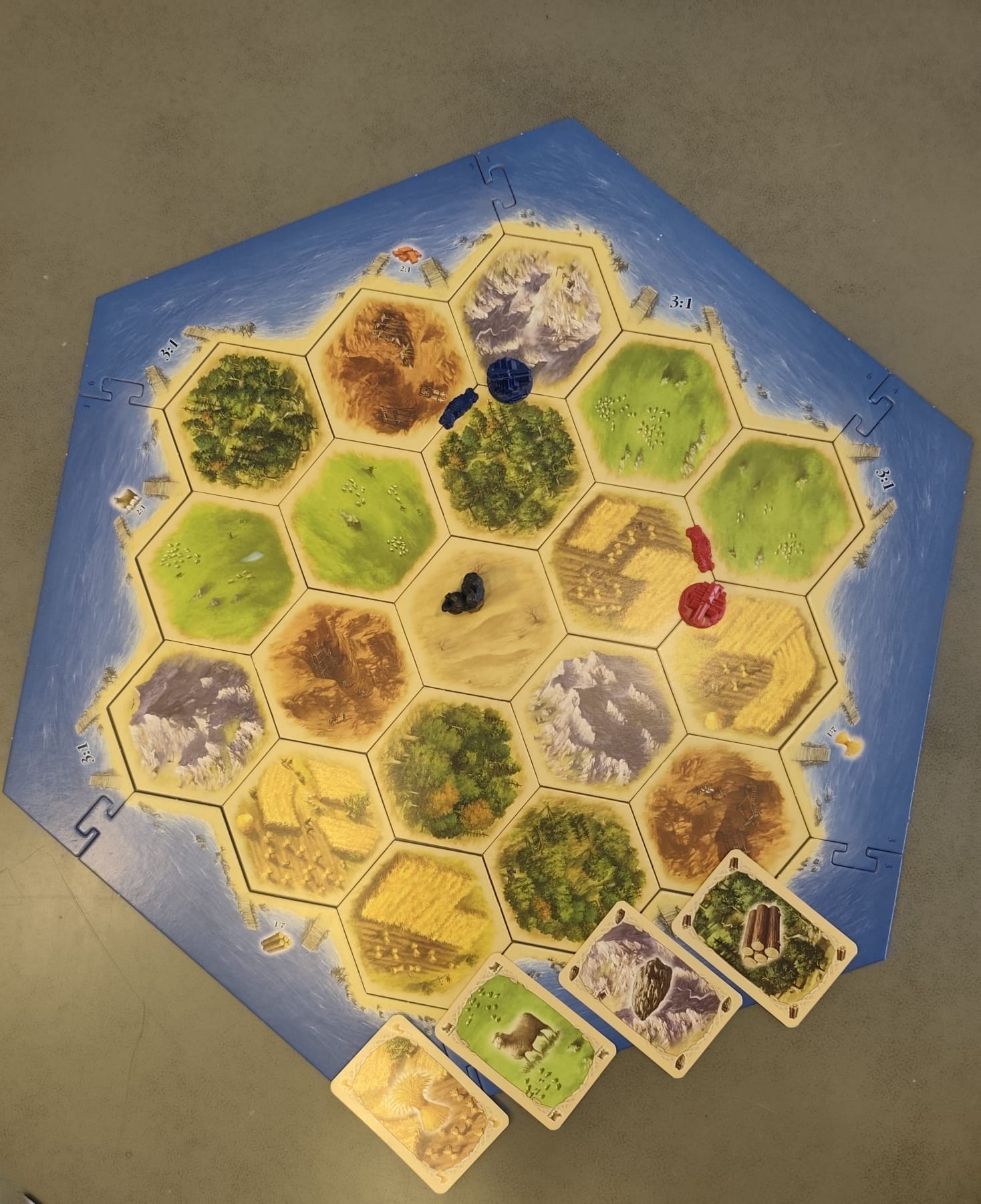
The board is made of hexagonal terrain tiles — forests, fields, pastures, hills, mountains, and desert — arranged randomly each game. Every hex has a number on it. When that number is rolled, everyone with a settlement or city adjacent to that hex collects resources: wood, wheat, sheep, brick, or ore.
Resources are used to build. Roads cost wood and brick. Settlements cost wood, brick, wheat, and sheep. Cities cost ore and wheat. The strategic question is always the same: what do you build, when, and where?
What Makes Catan Special
Trading
Negotiate trades with other players every turn — deals are loaded with strategy, and the best negotiator often wins.
Modular Board
Random hex placement ensures every game looks different — no two sessions of Catan play the same way.
Building Network
Roads, settlements, cities — your network expands across Catan as you race to 10 victory points.
Development Cards
Knights, Road Building, Victory Points — powerful cards that can flip the game's outcome in an instant.
How Does It Play?
Each turn begins with a dice roll that triggers resource production across the board — not just for the active player, but for everyone. This keeps all players engaged even when it isn't their turn, since every roll could fill someone's hand or frustrate a rival's plans.
After collecting resources, the active player can trade — either with other players through negotiation, or with the bank at fixed rates. The trading phase is where Catan truly comes alive. Deals are struck, alliances shift, and the player who negotiates best often wins.
The Robber adds friction: a roll of 7 moves it to any hex, blocking production and stealing a card from a nearby player. Collecting the Longest Road or Largest Army bonus adds two more points and a reason to compete beyond pure building.
Rating Breakdown
Pros & Cons
✅ What We Love
- Trading system creates genuine social tension every session
- Modular board means every game is visually different
- Easy to teach — most people learn in one game
- Works perfectly for mixed groups and families
- High replayability after hundreds of plays
- Massive expansion library available
- The perfect gateway game for new players
❌ What Could Be Better
- Luck of the dice can frustrate some players
- Requires exactly 3–4 players (5–6 needs expansion)
- Runaway leader can be hard to stop late game
- Some players may feel blocked out of resources early
Who Is This Game For?
🎯 Perfect For:
- Anyone new to modern board games — the perfect gateway
- Groups who enjoy negotiation and social play
- Families with kids aged 10 and up
- Game nights with 3 or 4 players
- A gift for anyone who has never played a real board game
- Anyone looking for a proven classic that always delivers
❌ Not Ideal For:
- Players who dislike luck or trading mechanics
- Groups of 2 or 5+ without the expansion
- Those who prefer deep solo or cooperative experiences
- Hardcore strategy gamers — try Dune Imperium instead
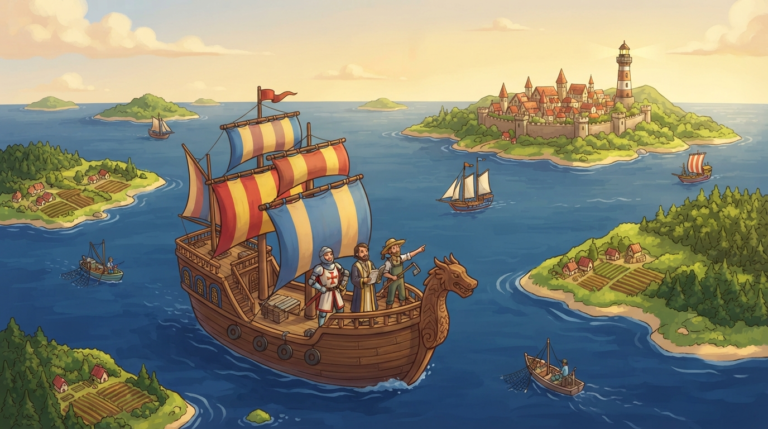
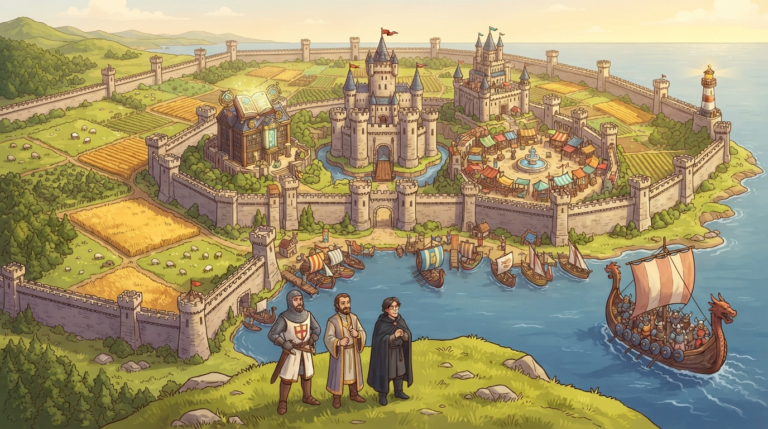
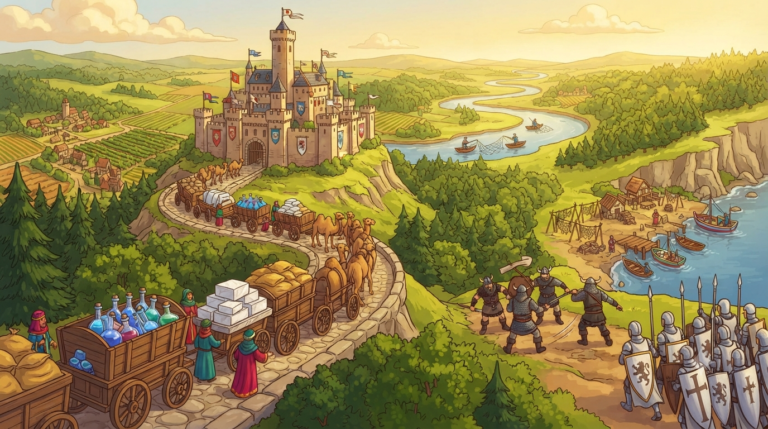
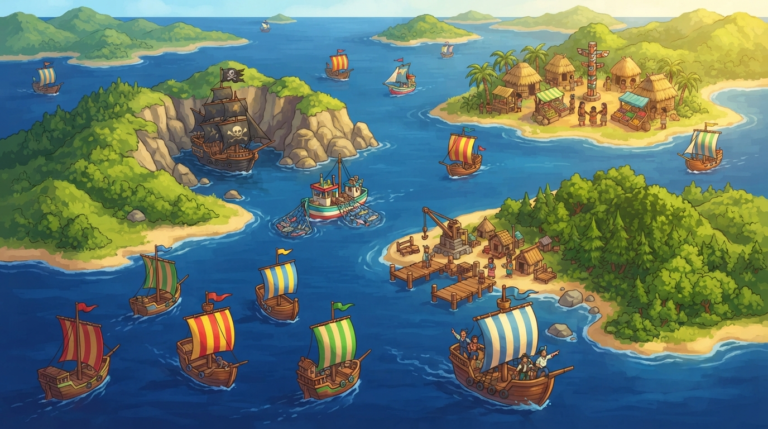
Once you've mastered the base game, five official expansions and standalone spin-offs add new depth, adventure, and replayability:
🏝️ Final Verdict
Catan is a masterpiece — not despite its simplicity, but because of it. In under an hour of learning, you can be fully immersed in one of the most socially rich, strategically engaging, and replayable board game experiences ever designed. Thirty years after its release, it still belongs on every shelf. If you don't own it yet, that's the easiest fix in board gaming.
This helps us keep Blue Dragon Board Games running and ad-free. Thank you for your support!
Leave a Comment on this article:
No comments yet — be the first to share your thoughts!
Leave a Reply